


Blog /
Do Private Jet Companies Need to Own Their Aircraft? The Hidden Risks of Fleet Ownership
Consumers often believe that private jet companies owning their aircraft are the safer choice. However, this isn't always the best way to evaluate a company's safety culture.

“Do you own the aircraft?
Consumers often believe that private jet companies owning their aircraft are the safer choice. However, this isn't always the best way to evaluate a company's safety culture.
When private jet companies own their aircraft, potential conflicts of interest can arise and the dynamic may not always align with the customers' best interests. Let’s explore this issue through historical case studies on JetIt, AvantAir, AeroVanti, JetSuite (along with its controversial relationship with JSX), and Volato.
Asset-Heavy Business Models: A Double-Edged Sword
Private jet providers that own their aircraft operate under “asset-heavy” business models. Often, this type of provider is labeled as a “closed-fleet” provider as compared to an “open-fleet” provider that may not own the assets. “Closed-fleet” requires substantial capital expenditures (CapEx) and operational expenditures (OpEx) such as mechanics, dispatch personnel, maintenance costs, tooling, etc.
This financial commitment necessitates a delicate balance in pricing strategies, demand management, and asset utilization to ensure profitability and sustainability. Missteps in any of these areas can have significant repercussions, potentially leading to profitability issues and conflicts of interest that negatively impact the customer.
Asset-Light or "Open-Fleet" Business Model
In contrast, the asset-light or "open-fleet" business model, where private jet companies do not own the aircraft, offers several benefits. Open-fleet providers can make safety decisions based on the most mission-appropriate aircraft, free from the necessity to fly a specific owned asset. This model can allow for greater customization of each client's flight, providing tailored solutions without the pressure of maintaining high utilization rates on owned aircraft. Additionally, it removes the inherent conflict of interest, as the provider's primary goal is to match the best available aircraft to each specific mission, enhancing both safety and client satisfaction.
History Lessons: Asset-Heavy Business Models
JetIt
JetIt owned and operated on a unique hybrid fractional ownership model, which allowed customers to own a share of a private jet. This model was supposed to provide benefits such as cost savings and guaranteed availability. However, JetIt's need to maximize fleet utilization to cover CapEx and OpEx created a conflict of interest. JetIt generated revenue through fractional-owner hourly fees, monthly maintenance fees of the HondaJet, upfront selling of aircraft fractional positions, and off-fleet charter flights.
JetIt priced its hourly charter rates at an attractive $1,600 per hour, compared to industry pricing closer to $3,500 per hour (plus fuel). However, the actual operating cost per hour, including deadhead time, was closer to $2,700 per hour by some estimates. This was exacerbated by maintenance issues, as nearly 75% of JetIt's fleet was reported to be out of commission due to maintenance needs and unpaid bills.
Despite “too-good to be true” hourly charter rates, the company often incurred losses, leading to financial instability. Over-scheduling and maintenance issues further compromised customer service quality. Ultimately, JetIt's asset-heavy model proved unsustainable, leading to its shutdown in May 2023.
AvantAir
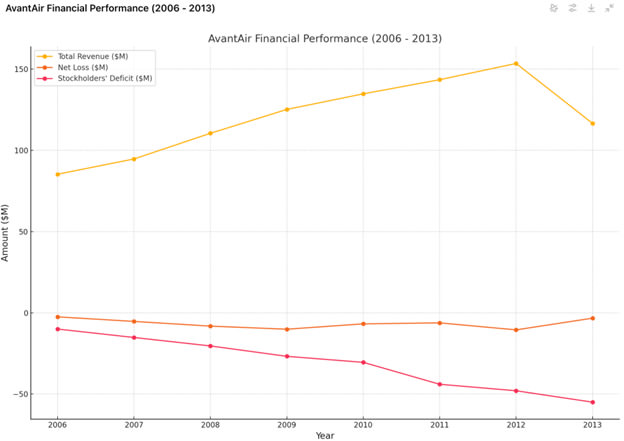
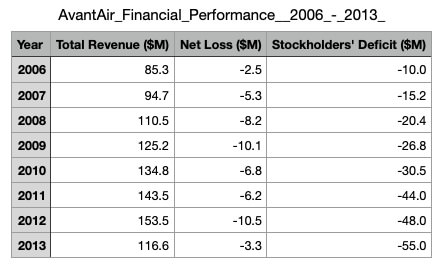
AvantAir, operating a fleet of 56 Piaggio Avanti aircraft, faced significant operational and financial challenges that led to its bankruptcy in 2013. The company struggled with maintenance failures and regulatory non-compliance, which grounded its entire fleet in June 2013 due to improper tracking of time-controlled parts.
Financially, AvantAir was in a precarious position long before the grounding, with a total deficit of $122.75 million. In the third quarter of fiscal 2013 alone, AvantAir reported an $8.33 million loss, a sharp increase from the $1.6 million loss in the same period the previous year. The company's reliance on high utilization rates for revenue generation meant that any disruption led to cascading failures. When their aircraft were grounded, AvantAir couldn’t generate the necessary revenue to cover their expenses, resulting in worthless fractional ownership shares for customers and numerous lawsuits over breaches of lease agreements and service failures. (Source BJT and Aerlex)
JetSuite and JSX
JetSuite, a private jet charter operator of the Phenom 100, filed for Chapter 11 bankruptcy in April 2020 after burning through over $100 million in cash. The company had received $57 million from affiliates, including investments from JetBlue Airways and Qatar Airways, and $50 million from unredeemed jet card deposits. Despite these significant investments, JetSuite failed to generate sufficient revenue to cover both operating and fixed expenses.
The COVID-19 pandemic was the final blow, with state lockdowns in JetSuite’s primary service area preventing operations and depleting funds. At the time of bankruptcy, JetSuite had under $1 million in cash on hand.
The relationship between JetSuite and JSX, its semi-private regional airline sibling, added complexity to the situation. Although court documents indicated that transactions between the companies were intended to benefit JetSuite, the lack of an escrow account for jet card deposits and high operating costs eventually led to financial instability and the cessation of JetSuite's operations. Despite efforts to manage costs and streamline operations, JetSuite's aggressive expansion and financial mismanagement resulted in its ultimate failure. (Source: Gollan)
Volato: From Ambition to Acquisition
Volato launched in 2021, co-founded by Matthew Liotta, with a mission to disrupt the private aviation space through a fractional ownership model tailored for short-haul flights. The company initially raised $38 million through convertible notes, providing the foundational capital needed to scale operations and grow its fleet of HondaJets. This funding came from various stakeholders who believed in the company’s innovative approach to private aviation.
In July 2023, Volato secured an additional $10 million in a Series A funding round led by PROOF.vc. This round further underscored investor confidence in its business model and positioned the company for its planned merger with Broadstone Acquisition Corp., a SPAC, to accelerate its growth trajectory. The SPAC process aimed to provide liquidity and access to public markets, but it also exposed the company to greater scrutiny and heightened operational pressures.
The HondaJet strategy seemed logical on paper. The aircraft's efficiency made it ideal for short missions, and Volato structured its fractional ownership model to appeal to a specific type of customer. But operational challenges surfaced. The HondaJet’s range and payload limitations created friction with client expectations. High utilization rates—necessary to sustain operations—strained both aircraft and service quality.
When JetIt collapsed in 2023, Volato attempted to onboard many of JetIt’s fractional owners. While this appeared to be a strategic opportunity, it also brought a host of dissatisfied clients into the fold, many of whom had lingering concerns about maintenance delays and operational transparency. The integration only compounded Volato’s existing operational and financial challenges.
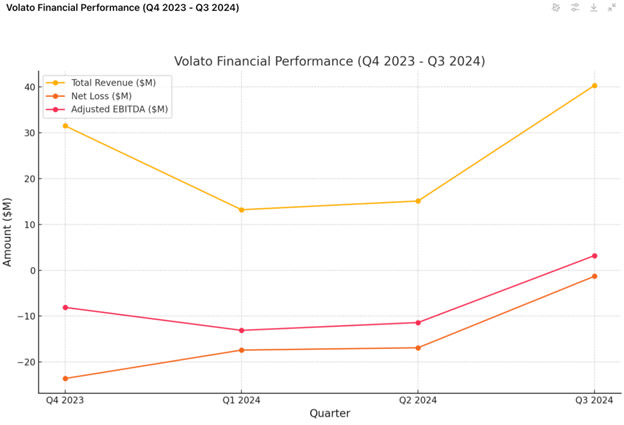
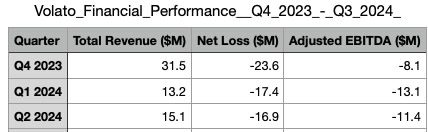
By late 2024, Volato faced mounting difficulties. The asset-heavy business model required significant capital to sustain operations, but operational inefficiencies and financial pressures made this untenable. The company ceased most of its operations and was acquired by another private aviation entity. While the acquisition salvaged some assets and provided a resolution for stakeholders, it marked the end of Volato as an independent entity.
Conclusion
While owning aircraft can introduce conflicts of interest, it’s not an absolute indicator of a company’s safety or reliability. Customers should evaluate providers based on their safety culture, customer service, and operational transparency.
Understanding the true costs of operating an aircraft is critical to evaluating pricing and service offerings. Fixed costs, such as crew salaries, benefits, and training, as well as insurance, hangar, and management fees, represent significant ongoing expenses. Variable costs, including fuel consumption (which varies by aircraft type), maintenance reserves for engines, auxiliary power units (APUs), and parts, as well as labor reserves, add to the overall operating expense. For example, fuel burn rates can range from 120 gallons per hour for a light jet to over 400 gallons per hour for a heavy jet, translating into substantial costs at current fuel prices.
If a provider’s pricing appears too low, it may indicate compromises in areas like maintenance, crew training, or customer service. Prospective clients should ask detailed questions about how costs are managed and whether reserves for critical components are adequately funded. Transparent companies will have clear answers about how they ensure safety, reliability, and operational integrity without cutting corners.
Explore the costs of all business models such as: charter, jet card, and ownership economics.
Outlier Jets is a premier private aviation company redefining the jet card experience with a relentless commitment to precision, transparency, and performance. Founded in 2018, Outlier offers fixed-rate jet cards, on-demand global charters, and whole aircraft sales. We provide our members with unmatched access to meticulously vetted light, midsize, super-midsize, and large-cabin aircraft.
More than just a provider, the Outlier Team acts as a trusted aviation partner. We leverage data-driven insights and proprietary market intelligence to help our members optimize cost, maximize flexibility, and confidently navigate the aviation landscape. At Outlier, private aviation isn’t about indulgence; it’s about efficiency, expertise, and making every moment count.

February 19, 2025


